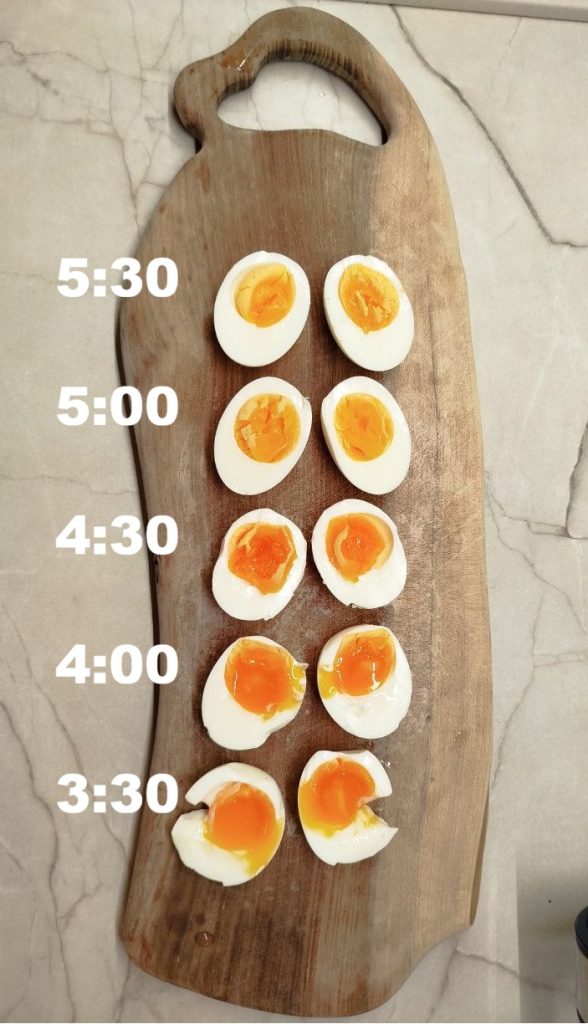
How to boil eggs at home to achieve yolks of varying firmness depending on how long the water has been boiling
Anyone who eats boiled eggs understands their benefits: they contain the ideal form of protein, along with many vitamins and minerals, and just 50 calories, yet they are very filling.
The main components of a boiled egg are:
Protein, which contains amino acids and biotin, and is absorbed by the body almost 100%.
Egg yolk: Contains fats, choline, lecithin, vitamins A, D, E and K, folic acid, selenium, as well as lutein and zeaxanthin (for eye health).
Boiled eggs are a healthy dietary food that provides a long-lasting feeling of fullness, contains no fibre, and is beneficial for bone and brain health.
However, not all of us manage to achieve the desired consistency of the yolk when boiling eggs. It’s either too runny or too firm, which isn’t to our liking.
So I’m going to explain, step by step, how to boil eggs to achieve either a runny or a firm yolk.
What do we need to boil eggs?
- some eggs actually
- saucepan or ladle
- water
- place the eggs in a saucepan and cover with water
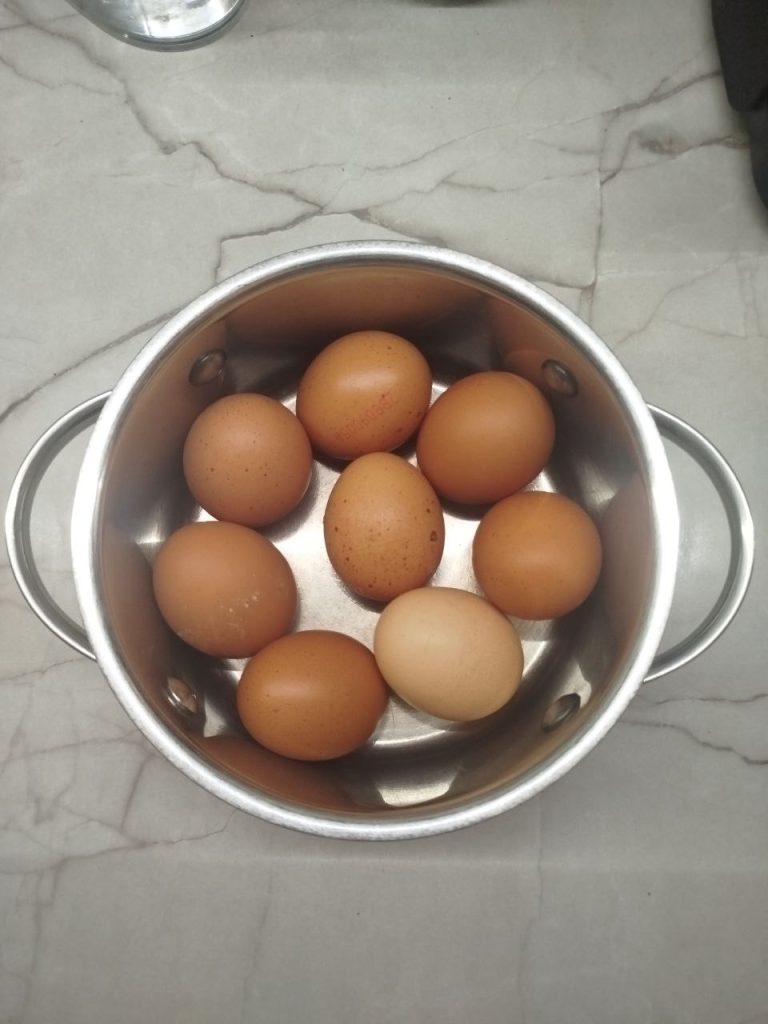
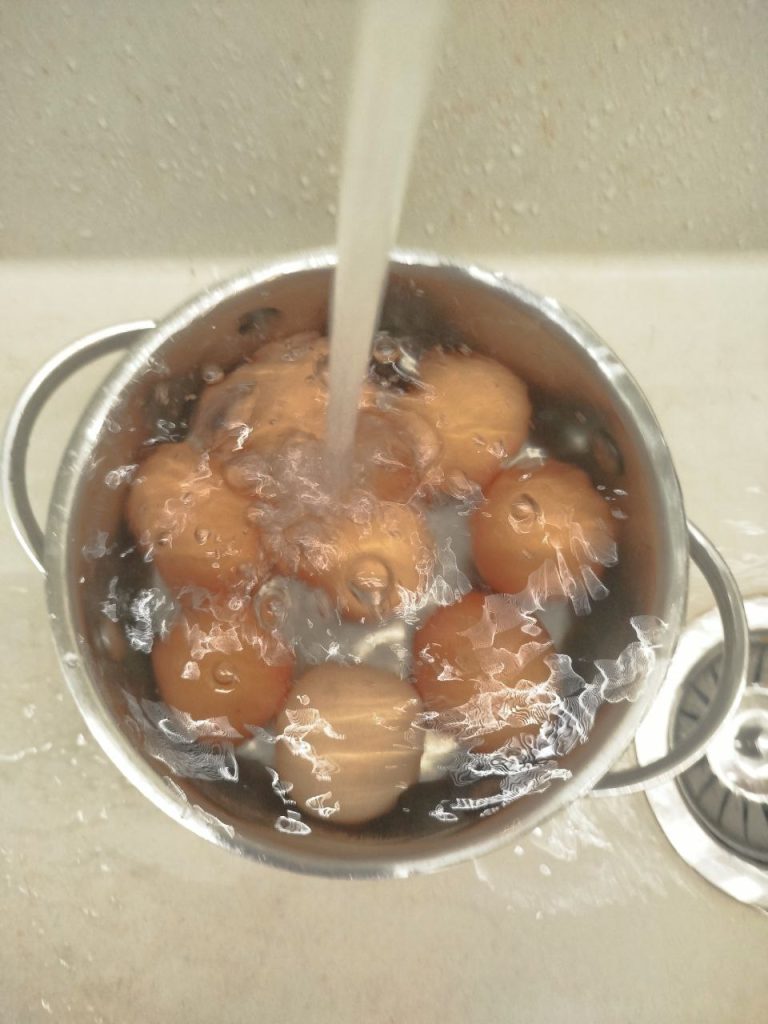
Cover the pan with a lid and place it on the stove on full heat until the water boils.
When the water boils, open the lid, reduce the heat by 30%, and set the timer. I’ll tell you how long to set the timer to achieve the desired yolk firmness.
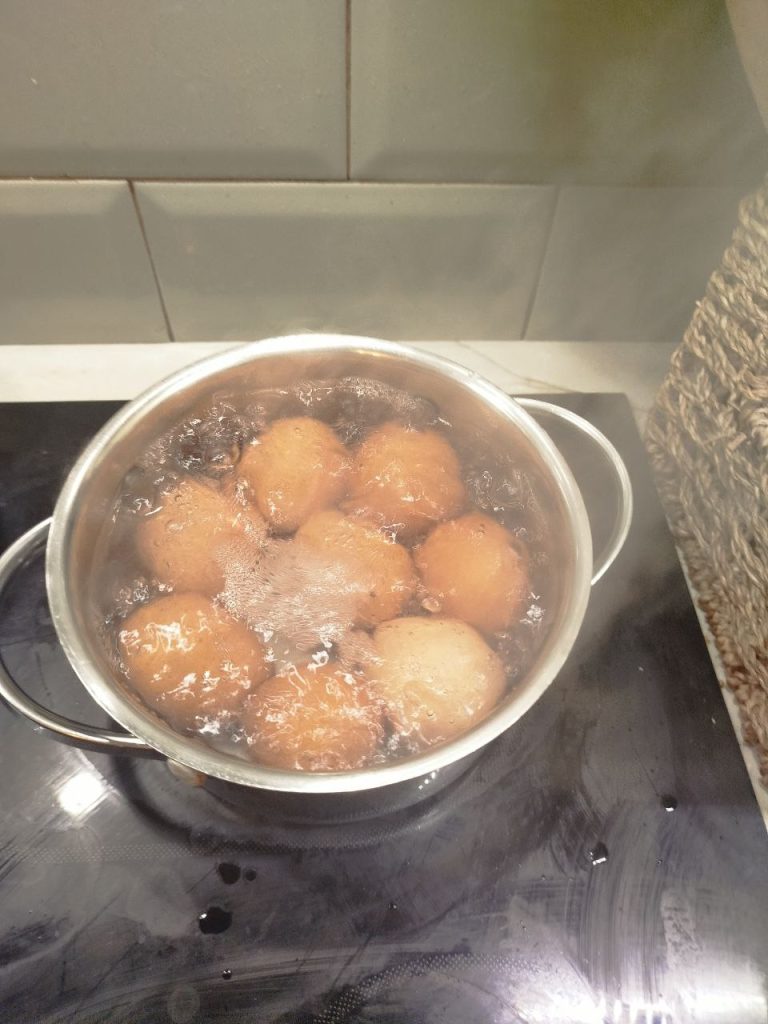
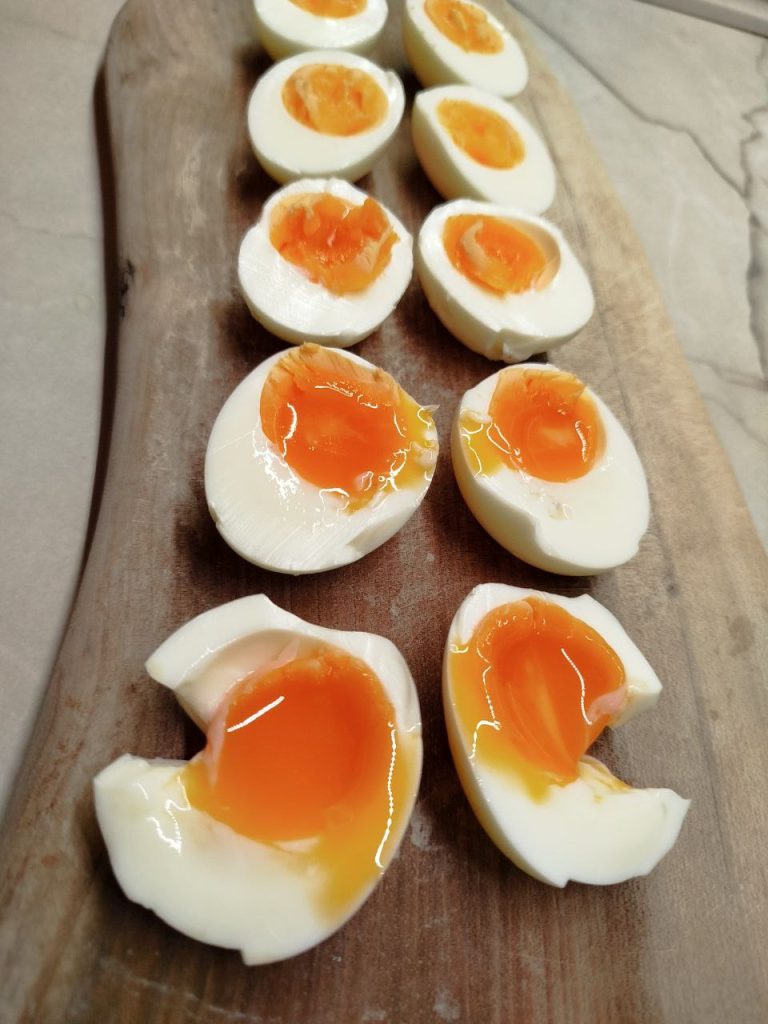
This boiled egg takes 3 minutes 30 seconds.
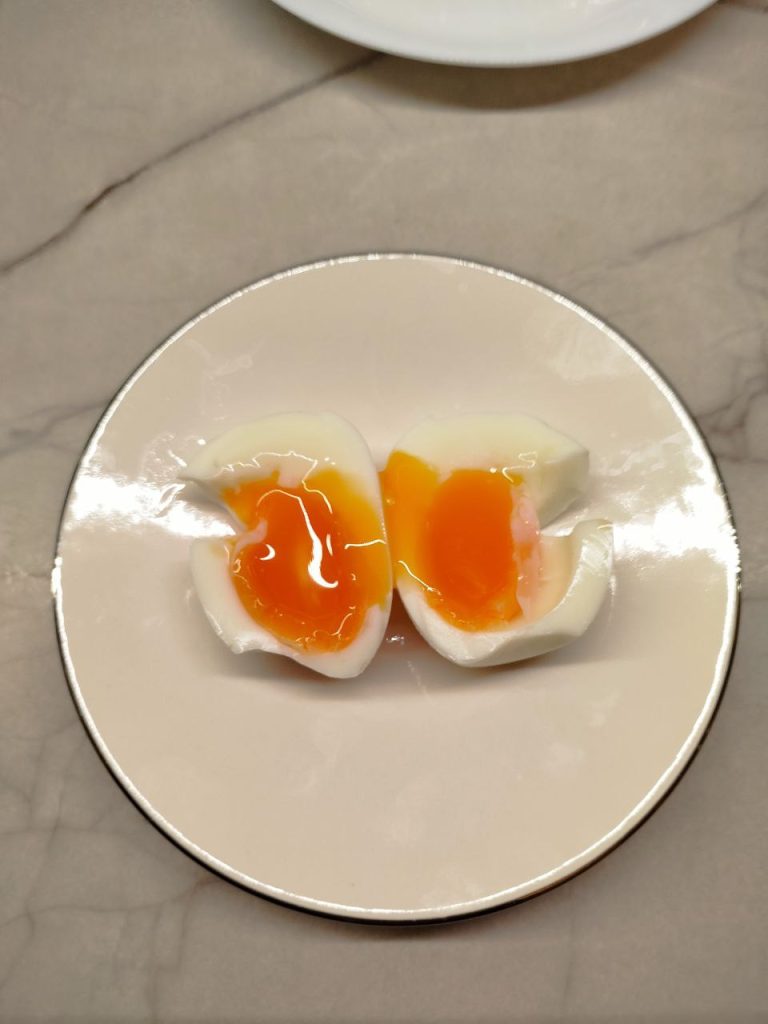
This is the yolk of a boiled egg that you get in 4 minutes.
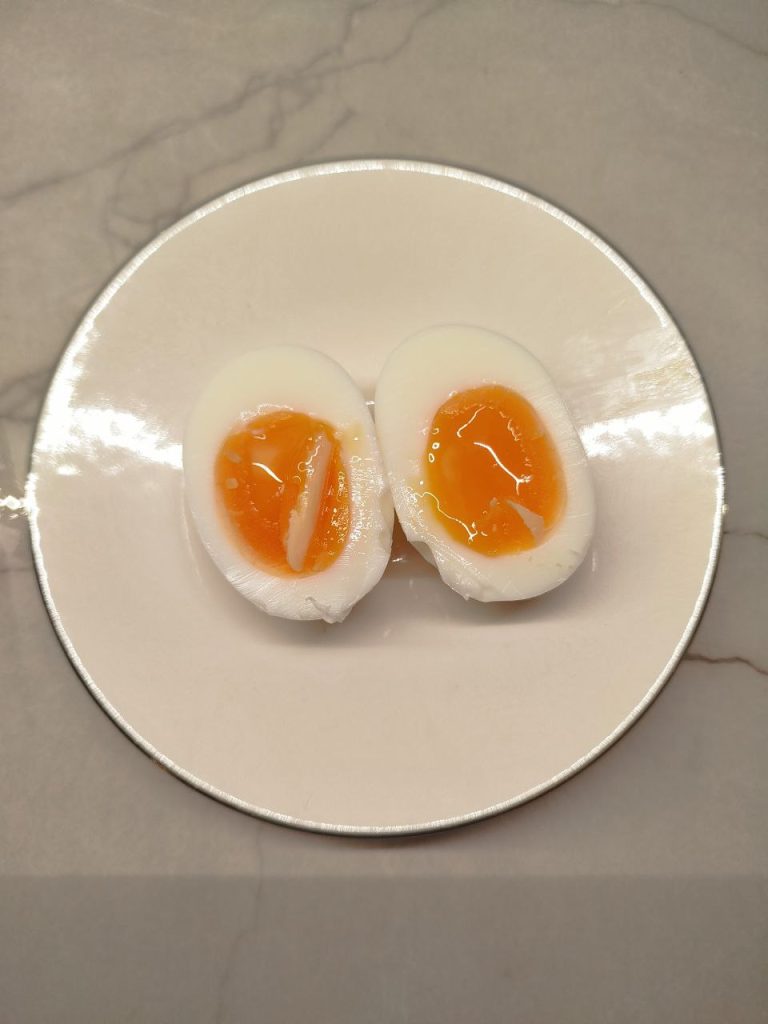
This is the result of boiled eggs obtained after 4:30 minutes of cooking.
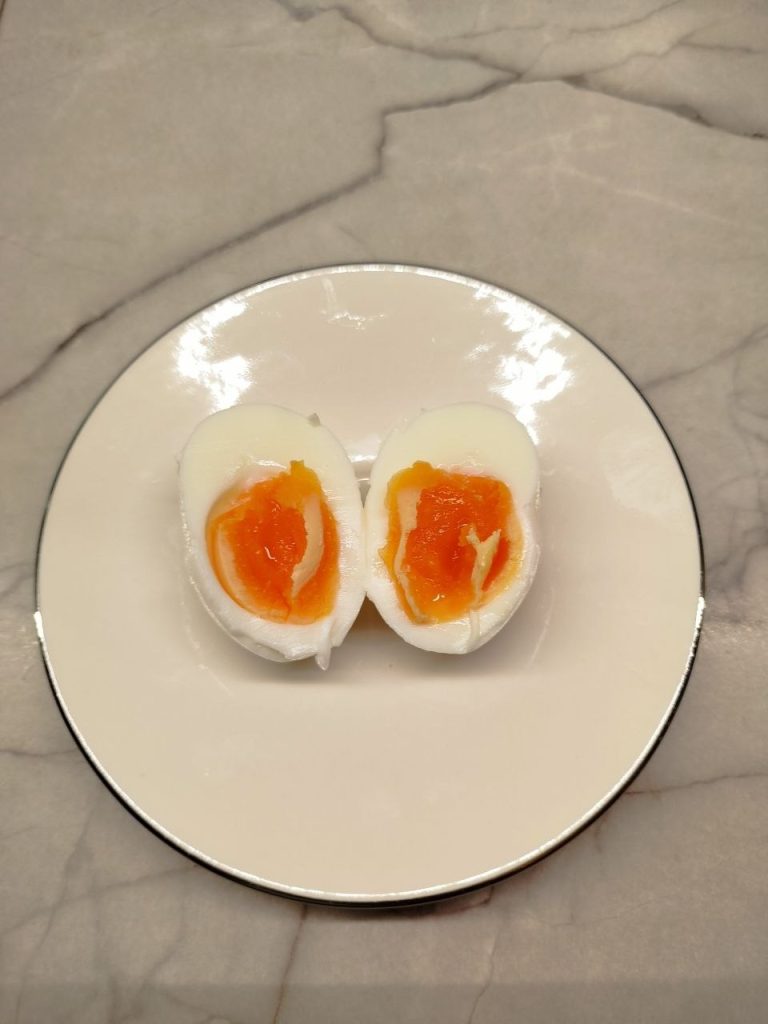
If you cook boiled eggs for 5 minutes, you’ll get this type of yolk
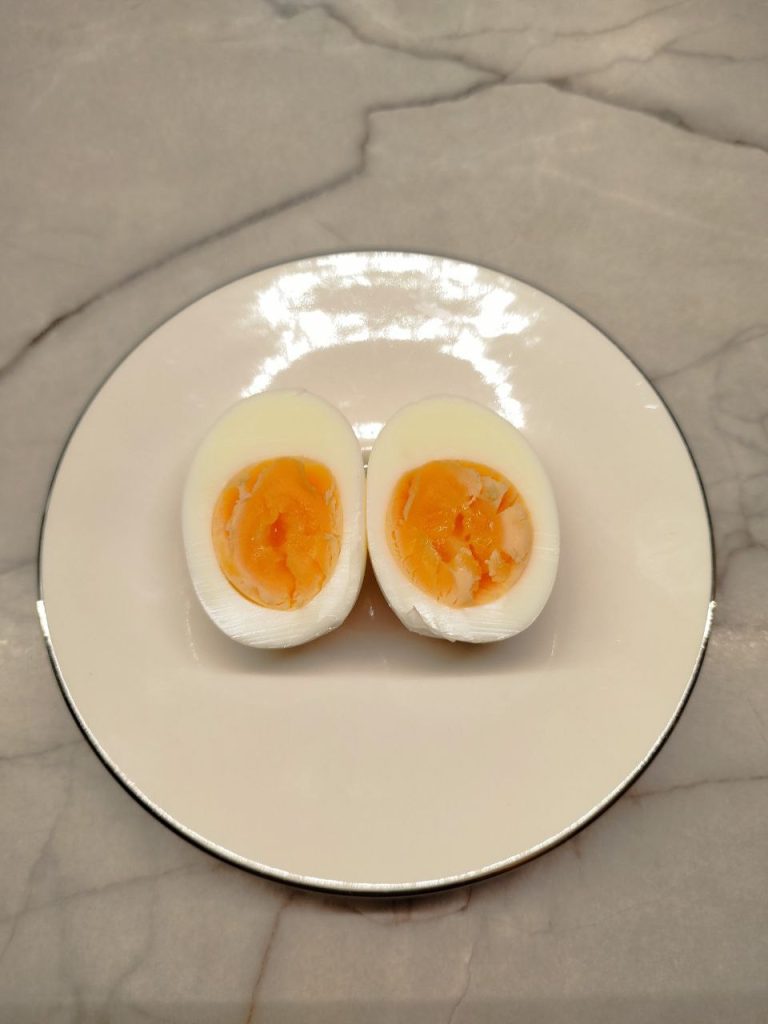
After 5:30 minutes of egg-swinging, you get this yolk
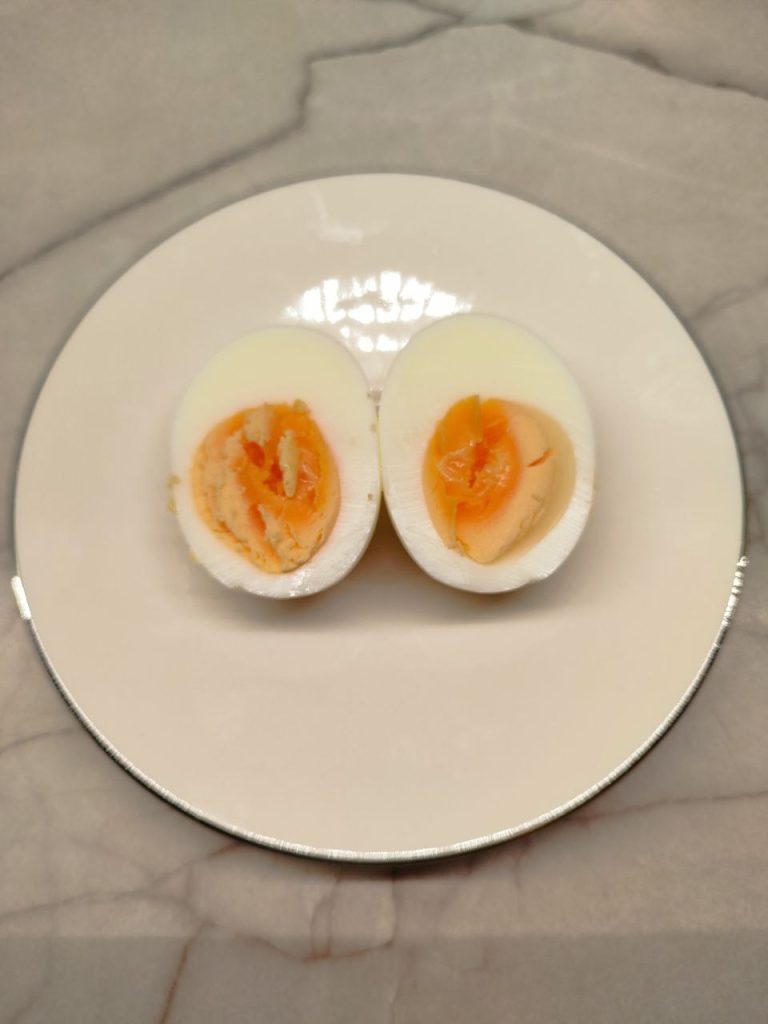
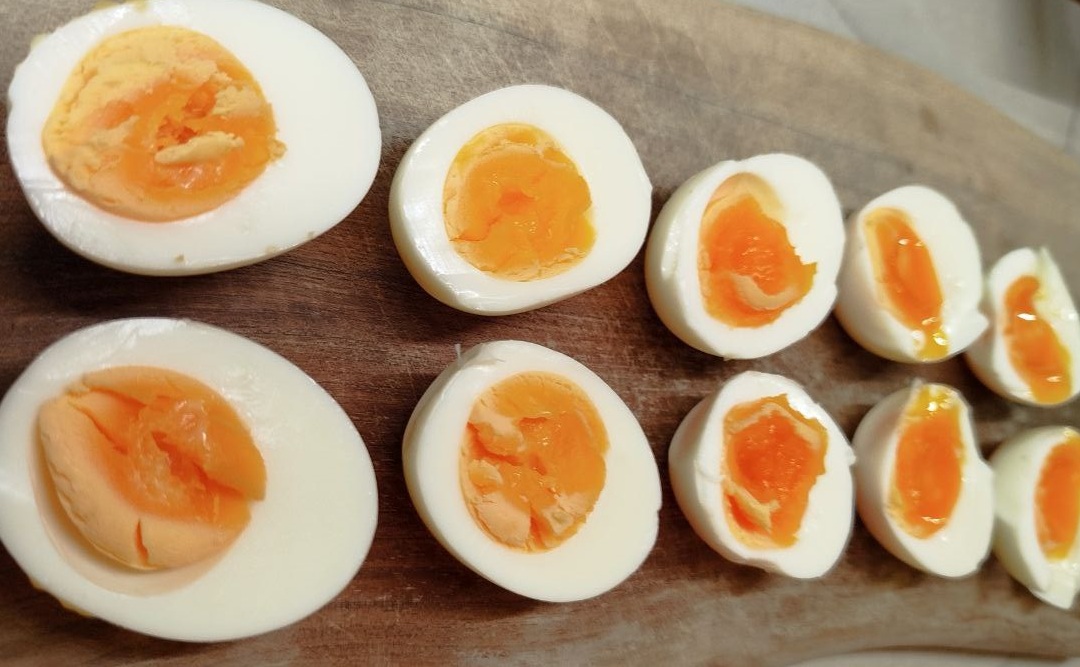
After the step-by-step recipe for boiling eggs, I can confirm that to get a very liquid egg, you need to boil it for 3.5 minutes. If you want a firm yolk, then cook it for more than 5 minutes and the result will be as expected. Thank you for your attention.
Also, pay attention to the picture below. How boiled yolks should look depending on the cooking time of the eggs.